

Over time, you may notice that the structure of your website significantly impacts its crawlability and search engine rankings. A well-organized website helps search engines efficiently navigate and index your content, thereby improving your visibility online. Poorly structured sites often lead to lost opportunities, where potential customers cannot find your offerings. In this post, you will learn how to optimize your website structure for better SEO performance, ensuring that your content reaches the audience it deserves.
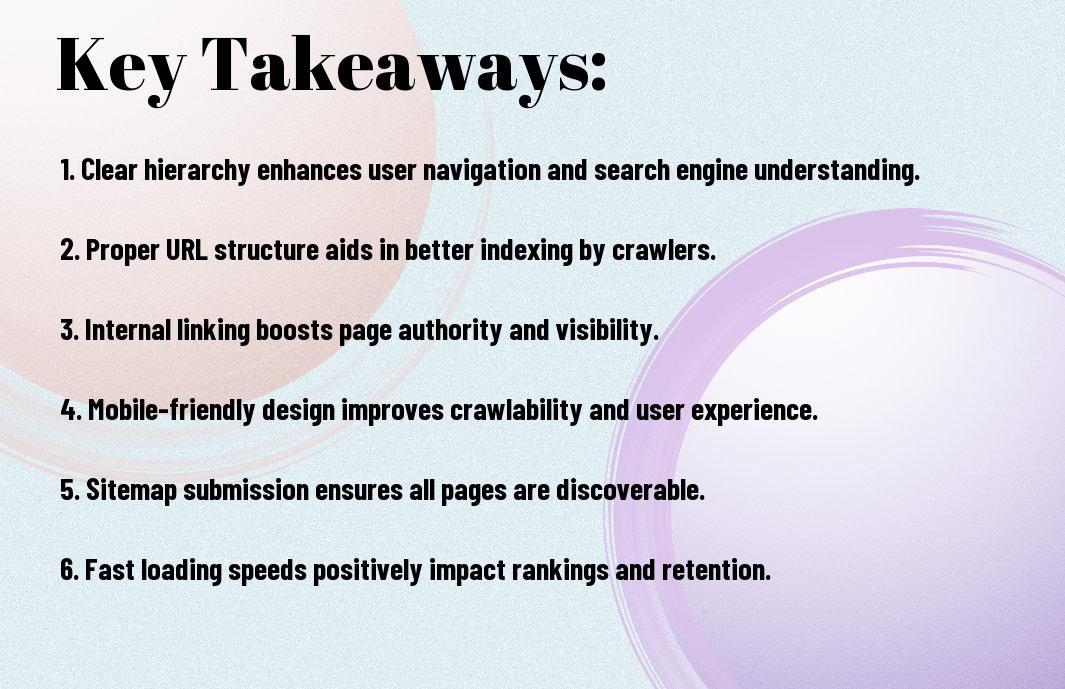
Key Takeaways:
- Website Hierarchy: A well-organized structure, featuring a clear hierarchy, allows search engines to easily navigate and index your pages, improving overall crawlability.
- Internal Linking: Utilizing internal links effectively connects related content, guiding both users and search engines to important pages, which can enhance rankings for targeted keywords.
- Responsive Design: Ensuring that your website is mobile-friendly contributes to better user experience and can positively impact SEO, as search engines prioritize sites that perform well on all devices.

The Importance of Website Structure in SEO
Your website’s structure is a key element that directly influences its crawlability and rankings in search engines. A well-organized site allows search engines like Google to navigate and index your pages more efficiently, leading to better visibility in search results.
User Experience and Navigation
A user-friendly website structure not only helps search engine bots but also enhances user experience. Clear navigation enables visitors to find information quickly, resulting in longer visits and reduced bounce rates, which positively impacts your SEO performance.
Indexing and Crawlability
Along with user experience, the way your website is structured significantly affects its indexing and crawlability. If your site has a complex structure, search engines may struggle to discover all your content, potentially leaving valuable pages out of their index.
At Crawford Web Design & SEO, understanding the balance between design and functionality is important. A streamlined site map, with clear URLs and internal linking, ensures that search engines can access and understand your content easily. When your site is structured effectively, it not only facilitates better indexing but also improves user engagement, boosting your rankings in search engine results.
Key Elements of Website Structure
Any successful website design incorporates key elements that impact both your site’s crawlability and its SEO performance. By structuring your website effectively, you enhance user experience and help search engines easily index your pages, which can lead to improved rankings and visibility on platforms like Google. When you prioritize these elements, you ensure a solid foundation for your website and its content.
URL Hierarchy
At the heart of a well-structured website is a logical URL hierarchy, which establishes a clear relationship among your pages. Each URL should reflect the content’s topic and its place within your site’s overall structure. A simple, organized hierarchy not only helps search engines understand your content but also allows users to navigate your site more intuitively.
Internal Linking
At its core, internal linking is vital for connecting various pages within your website. By strategically linking related content, you improve navigation and enable search engines to discover and index your pages more efficiently. This technique helps distribute link equity across your site, which can enhance the rankings of individual pages.
But be mindful of your internal linking strategy—overlinking or using manipulative tactics can lead to poor user experience and potential penalties from search engines. Create contextual links that genuinely enhance navigation and aid in the user journey. Aim for a balance where your links provide additional value without overwhelming your readers. Prioritizing relevant connections between your content not only boosts your SEO performance but also keeps users engaged longer, ultimately supporting your goals for higher rankings.

Best Practices for Organizing Content
Unlike a disorganized website, a well-structured site enables search engines to better understand your content, which can enhance your crawlability and improve your rankings. Organizing content thoughtfully ensures that visitors can easily navigate your site, ultimately leading to a better user experience and higher retention rates. Prioritize clear hierarchies, descriptive URLs, and intuitive navigation to guide users and search engines alike through your offerings.
Silo Structure
You’ll find that a silo structure involves grouping related content together under a main category. This approach makes it easier for search engines to identify the context of your pages, which positively impacts your rankings. By keeping related topics together, you also improve user experience, encouraging visitors to explore more of your content.
Utilizing Categories and Tags
Among the most effective ways to organize your content are categories and tags. By assigning your content to specific categories, you help search engines and users alike understand the structure and relevance of your offerings. This organization improves your site’s crawlability and can lead to increased rankings in search results.
In fact, utilizing categories and tags not only streamlines navigation but also enhances internal linking, allowing search engines to better index your pages. This practice creates a clear path for users to find related content, which can increase session duration on your site. However, be cautious; overusing tags can create duplicate content issues, which can negatively affect your SEO efforts. Strive for a balanced approach to maximize the benefits of a well-organized content structure.
Technical SEO Considerations
All elements of technical SEO play a significant role in enhancing your website’s crawlability and can ultimately affect your rankings. With a well-structured website, search engines can efficiently index your pages, ensuring that your content reaches your audience in Asheville and beyond. By focusing on aspects like site speed, mobile optimization, and secure connections, you enhance user experience, which is increasingly important for both SEO and visitor retention.
XML Sitemaps
An XML sitemap serves as a roadmap for search engines, helping them locate and index your site’s pages effectively. Optimally structuring your sitemap allows you to prioritize important content, thus increasing the likelihood that it will be crawled and indexed more frequently. Make sure your XML sitemap is easily accessible and up to date to facilitate better search engine navigation.
Robots.txt and Crawling Directives
Between managing your website’s content and ensuring that search engines understand which pages to index, a properly configured robots.txt file is vital in guiding crawlers. By setting appropriate crawling directives, you can prevent search engines from crawling duplicate or low-value content, preserving your link equity and optimizing your site’s focus.
Also, a well-structured robots.txt file can either enhance or hinder your SEO efforts. For example, if you accidentally block important pages, you risk them being excluded from search engine results. Additionally, be mindful not to disallow access to pages that hold valuable content or that drive traffic. On the positive side, correctly implemented crawling directives can help safeguard your site’s structural integrity and ensure that search engines focus on your most important content, positively impacting your overall search engine visibility.
Tools for Analyzing Website Structure
Not all website structures are created equal; some are optimized for crawlability and user experience while others hinder performance. To fully understand how your site’s architecture affects SEO, utilizing effective tools is important. By leveraging advanced analytics, you can identify issues and areas for improvement, ultimately enhancing your rankings and visibility in search engines.
SEO Auditing Tools
Structure is key in ensuring that search engines can navigate your website efficiently. Tools like SEMrush, Ahrefs, and Screaming Frog provide in-depth analysis of your site’s architecture, helping you pinpoint broken links, duplicate content, and other structural issues. By employing these tools, you can create a cleaner, more efficient website structure that improves both user experience and SEO performance.
Google Search Console Insights
Tools like Google Search Console are invaluable for understanding how search engines view your site. They provide data on your site’s performance in search results, identifying which pages are indexed and potential issues that may be affecting your rankings. By analyzing this information, you can make informed decisions to enhance your website structure and optimize for better visibility.
Due to its direct connection with your website and search engine behavior, Google Search Console offers insights into indexing status, search queries, and click-through rates. Utilizing this tool helps you identify errors that can hinder your rankings, such as crawl errors or mobile usability issues. By regularly checking these insights, you ensure that your site remains optimized and well-structured, driving better performance and search visibility over time.
The Impact of Mobile Responsiveness
Keep in mind that mobile responsiveness plays a vital role in the success of your website. With over 50% of global web traffic coming from mobile devices, ensuring your site is mobile-friendly is no longer optional. If your website is not responsive, users may experience difficulties navigating, resulting in high bounce rates. This negatively affects your search engine rankings and can diminish the overall user experience. By optimizing your site for mobile, you not only enhance accessibility but also boost your visibility in search results, leading to better engagement and conversions.
Conclusion
The understanding of website structure directly impacts your site’s crawlability and search engine rankings. By organizing your content effectively, utilizing clear navigation, and implementing a logical hierarchy, you enhance the likelihood that search engines will index your pages efficiently. This not only improves your visibility but also offers a better user experience. Investing time in optimizing your website structure can lead to significant improvements in your SEO performance, positioning your business for greater online success.
FAQ
Q: How does a well-organized website structure impact SEO?
A: A well-organized website structure improves user experience and helps search engines understand your content better. When your site is hierarchical, with a clear flow from the homepage to sub-pages, it allows crawlers to navigate your content efficiently. This organization ensures that important pages are linked appropriately, leading to better indexing and potentially higher rankings in search engine results.
Q: What role do internal links play in website structure and crawlability?
A: Internal links guide both users and search engine bots through your website. They help establish a site’s architecture by connecting related content and distributing link equity. A solid internal linking strategy can enhance the visibility of important pages, making it easier for search engines to find and rank them. Additionally, providing context through descriptive anchor text can improve the overall relevance of the linked pages.
Q: Why is mobile-friendliness important for website structure and SEO?
A: Mobile-friendliness is a key aspect of website structure that directly affects SEO rankings. With an increasing number of users accessing websites via mobile devices, search engines prioritize sites that provide a seamless mobile experience. Responsive design ensures that content is easily accessible and navigable on smaller screens, which can reduce bounce rates and increase user engagement—both of which are positive signals for search rankings.