

You may not realize it, but site speed significantly impacts your website’s SEO rankings. When your pages take too long to load, users are more likely to leave, leading to higher bounce rates and lower engagement. Search engines prioritize fast-loading sites, which means that if yours lags, it could suffer in search visibility. In this post, we’ll explore how to enhance your website’s loading times and the positive effects this can have on your overall SEO strategy, helping you attract and retain visitors more effectively.
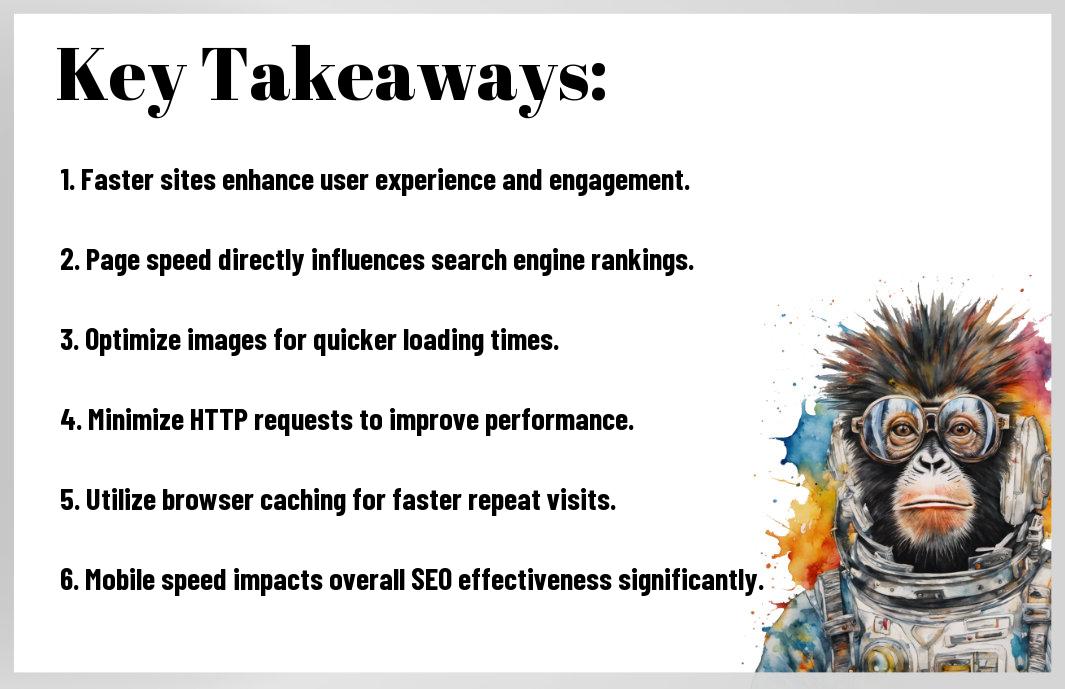
Key Takeaways:
- Site speed directly influences user experience; slower websites tend to frustrate visitors, leading to higher bounce rates.
- Search engines like Google consider loading times as a ranking factor, meaning faster sites are likely to achieve better visibility.
- Improving website performance can enhance not only SEO but also conversion rates, as users are more likely to engage with a fast-loading site.
Understanding Site Speed
To enhance your website’s performance, it’s important to grasp the significance of site speed. Site speed refers to how quickly your web pages load, impacting user experience and search engine rankings. A faster site not only retains your visitors but also boosts your chances of ranking higher in search results, as search engines prioritize speed in their algorithms.
What is Site Speed?
One key aspect of your website’s effectiveness is its load time, measured typically in seconds. Site speed encompasses various elements, including how quickly the server responds, how fast the HTML and images load, and how efficiently the page renders on the visitor’s device.
Factors Affecting Site Speed
Behind every web page’s load time are numerous factors that can significantly influence your overall site speed. Here are a few critical components to consider:
- Hosting server
- Image optimization
- Code efficiency
- Third-party scripts
- Browser caching
Knowing how these factors interplay will empower you to take actionable steps in optimizing your site speed.
Even more vital, each element contributes uniquely to your overall site performance. For instance, a slow hosting server can create delays before users even begin to interact with your page, while large, unoptimized images can cause additional loading time. Efficient code execution also plays a role, as poorly organized scripts can slow down page rendering. Thus, examining how each factor impacts your site is important for an optimal experience.
- Regular maintenance
- Content delivery networks (CDNs)
- Reducing redirects
Knowing these elements helps you prioritize areas for enhancement, ultimately leading to a better site speed and user experience.

The Impact of Site Speed on SEO
Some studies have shown that faster-loading websites often rank better in search engine results. This is primarily due to improved user experience, as search engines like Google prioritize sites that offer quick access to information. You can explore more about what page speed is and how it influences SEO. A site that loads swiftly is more likely to keep visitors engaged, leading to better overall performance in search rankings.
User Experience and Engagement
User experience is directly tied to how fast your website loads. When your site is quick, visitors are more likely to explore other pages and engage with your content, reducing bounce rates. A seamless experience encourages users to return, translating into increased loyalty and higher conversion rates.
Search Engine Rankings
The speed at which your site loads can significantly affect your visibility in search engine rankings. If your website takes too long to load, you risk losing potential visitors and facing penalties from search engines. It is important to optimize your site speed by minimizing file sizes, utilizing caching, and employing content delivery networks. Furthermore, studies indicate that improving your site speed can lead to a 10-20% increase in organic traffic. Therefore, addressing speed not only enhances user experience but also positively influences your website’s overall authority and ranking.
Tools to Measure Site Speed
Not all tools are created equal when it comes to measuring your site speed. You can use Google PageSpeed Insights, which provides valuable insights and suggestions for improvement based on real user data. Another great option is GTmetrix, which offers a detailed report on your site’s performance, including load times and optimization recommendations. Additionally, Pingdom allows you to test your site from various locations worldwide, helping you understand how geographic factors can impact loading times. By utilizing these tools, you can track your progress and make data-driven decisions to enhance your website’s speed, ultimately improving your SEO rankings.

Best Practices for Improving Site Speed
After assessing your website’s performance, implementing best practices will significantly enhance your site speed. Start by using a content delivery network (CDN) to distribute your content globally, minimizing load times for users based on their geographic location. Optimize your code by minifying CSS, JavaScript, and HTML, and prioritize mobile responsiveness to cater to a growing number of mobile users. Each of these strategies can lead to improved site speed, which is a vital factor in your search engine rankings.
Image Optimization
Speed is heavily influenced by the images on your site. To enhance performance, you should compress images without sacrificing quality. Use image formats like WebP, which maintains high quality at lower file sizes, and implement responsive images that adjust to different screen sizes. Reducing the size of images can significantly decrease your load times, positively impacting your user experience and SEO rankings.
Minimizing HTTP Requests
Requests to the server can slow down your site. Each element on a page—like images, scripts, and stylesheets—generates an HTTP request. To mitigate this, you should aim to reduce the number of elements on your pages. Combine multiple CSS or JavaScript files into a single file and use CSS sprites for images when appropriate. This way, you reduce the number of requests, speeding up your site, and improving its performance.
Further optimization involves understanding the impact of HTTP requests on load times. By consolidating your resources, you not only enhance speed but also reduce server strain—leading to a more responsive site. Additionally, tools such as browser caching can lessen the need for identical requests. Regularly review your site’s elements and remove any unnecessary requests, which can be detrimental to performance. Streamlining your HTTP requests ensures that your site remains fast, improving overall user satisfaction and boosting your search engine rankings.
Mobile Performance and Its Importance
Unlike desktop users, mobile users expect fast-loading pages due to their on-the-go browsing habits. A delay of just a few seconds can lead to a high bounce rate, negatively impacting your rankings. It’s vital to optimize your mobile site performance to enhance user experience and engagement. A seamless mobile experience not only keeps users on your site but also boosts your visibility in search results. To understand the link between speed and SEO, check out How Page Speed Affects SEO.
Case Studies: Site Speed and SEO Success
All business owners and webmasters must understand how site speed can significantly affect SEO rankings. Numerous case studies illustrate this point:
- In 2017, a popular e-commerce site improved its loading time from 8 seconds to 2 seconds, resulting in a 20% increase in conversions.
- A news website reduced its load time by 1 second and experienced a 30% increase in organic traffic within two months.
- A tech blog optimized its images, leading to a 40% boost in page views and an improved ranking on Google.
These examples highlight how a faster site not only improves user experience but also enhances search engine visibility. By prioritizing site speed, you position yourself for greater success.
The Role of Site Speed in SEO
The speed of your website significantly influences your SEO success and user experience. When you optimize your site for faster loading times, you not only enhance visitor satisfaction but also improve your search engine rankings, as search engines prioritize speedy sites. By implementing strategies such as image compression, browser caching, and reducing server response times, you can create a more efficient and appealing online environment for your audience, ultimately leading to increased traffic and conversions.
FAQ
Q: How does site speed affect SEO rankings?
A: Site speed plays a significant role in SEO rankings because search engines prioritize user experience. If a website loads quickly, it enhances user satisfaction and encourages visitors to stay longer. Conversely, if a site is slow, users may leave, leading to higher bounce rates, which can negatively impact rankings. Search engines, like Google, use page speed as a ranking factor, meaning faster websites are more likely to appear higher in search results.
Q: What are some effective ways to improve website loading times?
A: There are several strategies to enhance website loading times: 1) Optimize images by compressing them without sacrificing quality; 2) Minimize HTTP requests by reducing the number of elements on a page; 3) Enable browser caching so that visitors don’t need to reload assets every time; 4) Use Content Delivery Networks (CDNs) to distribute content closer to users; 5) Minify CSS, JavaScript, and HTML files to decrease file sizes. Implementing these techniques can lead to faster loading times and improved user experience.
Q: How does a slow website impact user behavior and SEO performance?
A: A slow website can lead to immediate negative effects on user behavior, as visitors are more likely to leave if a page takes too long to load. This can increase the bounce rate, signals to search engines that your site may not be providing the desired experience. Over time, consistent slow performance can result in decreased organic traffic, as search engines may lower your rankings due to user dissatisfaction. Therefore, maintaining optimal site speed is vital for attracting and retaining visitors, as well as sustaining SEO performance.