

Over the past few years, SSL certificates have emerged as a vital component of web security, directly influencing your website’s SEO rankings. When your site is secured with HTTPS, it not only protects your users’ data but also boosts their trust, which can lead to improved traffic and engagement. Search engines, particularly Google, prioritize sites with SSL encryption, making it important for you to understand how implementing this security measure can enhance your online visibility and credibility.
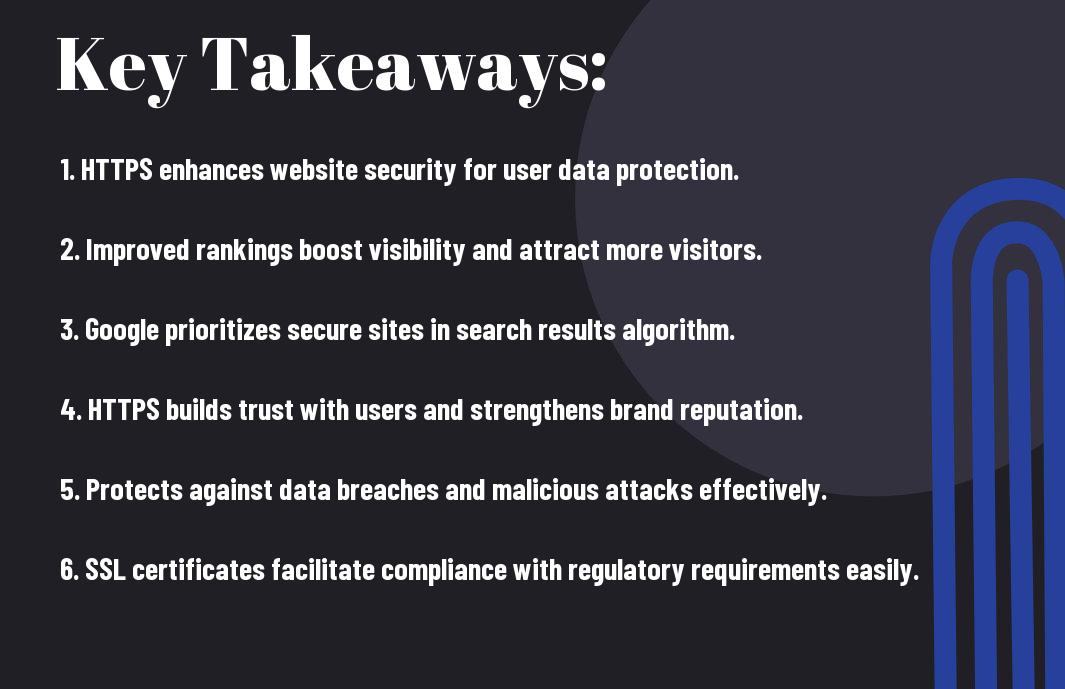
Key Takeaways:
- Secure Data Transmission: SSL certificates encrypt data exchanged between users and websites, protecting sensitive information from interception, which enhances user trust.
- Improved SEO Rankings: Search engines, including Google, prioritize HTTPS websites in search results, leading to higher visibility and increased organic traffic.
- User Trust and Engagement: Websites with SSL certificates often experience lower bounce rates and higher user engagement, as visitors feel safer exploring and interacting with protected sites.
Understanding SSL Certificates
Before delving into the world of SSL certificates, it’s necessary to grasp their role in securing online communications. An SSL (Secure Socket Layer) certificate ensures that data transmitted between your website and its visitors is encrypted, providing a shield against potential cyber threats. This not only enhances website security but also builds trust with your audience, ultimately improving user experience.
What is an SSL Certificate?
Before exploring further, it’s important to understand that an SSL certificate is a digital certificate that authenticates the identity of your website and encrypts data exchanged over the internet. This encryption prevents unauthorized access to sensitive information, ensuring a safer browsing experience for your users.
Types of SSL Certificates
After gaining an understanding of what SSL is, you should know that SSL certificates vary based on the level of validation and the number of domains secured. Here’s a breakdown of common types:
| Type | Description |
| Domain Validated (DV) | Basic encryption, fastest issuance. |
| Organization Validated (OV) | More rigorous identity checks, enhanced trust. |
| Extended Validation (EV) | Highest level of validation, green address bar. |
| Wildcard SSL | Secures a single domain and unlimited subdomains. |
| Multi-Domain SSL | Secures multiple domains under one certificate. |
Knowing about these types will help you choose the right SSL certificate that aligns with your website’s security needs and enhances your site’s SEO potential.
Another aspect to consider is the implications of each SSL certificate type on your website’s reputation and performance:
| SSL Type | Benefits |
| DV SSL | Quick issuance, good for blogs. |
| OV SSL | Better trust, ideal for organizations. |
| EV SSL | High trustworthiness, recommended for e-commerce. |
| Wildcard SSL | Cost-effective for multiple subdomains. |
| Multi-Domain SSL | Streamlined management of multiple sites. |
Knowing the differences between these types will enable you to secure your site effectively, enhance your ranking on search engines, and instill confidence in your visitors.
The Importance of HTTPS
There’s no doubt that HTTPS has become a fundamental standard for web security. This protocol not only encrypts the data exchanged between your website and its visitors, but it also signals to search engines that your site is trustworthy. As a result, websites utilizing HTTPS can enjoy enhanced rankings, giving you a competitive edge in the digital landscape.
Securing Data Transmission
One of the primary benefits of HTTPS is its ability to secure data transmission. By encrypting the information exchanged between your site and users, you effectively protect sensitive data from threats such as eavesdropping and man-in-the-middle attacks. This allows users to interact with your site confidently, knowing their personal information is safe.
Establishing Trust with Users
Against the backdrop of increasing online threats, establishing trust with your users is more important than ever. By using HTTPS, you demonstrate a commitment to user security. This is vital as customers are likely to abandon sites lacking security features, affecting both your conversion rates and brand reputation.
Users today are more aware of the importance of online security. When they see the padlock icon in their browser, it provides a sense of safety and assurance that their information is secure. In fact, a study revealed that 84% of consumers won’t proceed with a purchase if they see a warning on your site. By prioritizing HTTPS, you’re not only protecting sensitive data but also fostering a trustworthy environment that encourages engagement and loyalty.

SEO Benefits of Using SSL Certificates
Once again, implementing SSL certificates not only secures your website but also enhances its SEO performance. Search engines, particularly Google, prioritize HTTPS websites in their rankings, which can significantly impact your visibility. For a deeper dive on this topic, check out the Importance Of SSL Certificates In SEO Rankings.
Impact on Google Rankings
At the core of SEO, Google’s algorithm favors secure sites, which gives those utilizing SSL a competitive edge. Websites with HTTPS are more likely to appear higher in search results, ultimately driving more organic traffic to your site.
Enhanced User Experience
User trust is fundamental for online success, and SSL certificates directly contribute to this. When visitors see the padlock icon in the address bar, they feel reassured about their safety while browsing your site, which can lead to increased engagement and customer loyalty.
Certificates not only protect sensitive data but also ensure a safer browsing environment. This reduces the risk of data theft and phishing attacks, fostering a sense of security among your users. By prioritizing user safety, you create a positive impression, which is vital for retaining users and converting visits into actions. By enhancing user experience through SSL, you significantly improve your site’s reputation and long-term success.

How to Implement SSL Certificates
After deciding to secure your website, implementing an SSL certificate is relatively straightforward. Start by choosing a reliable Certificate Authority (CA) to purchase your certificate. Once you have your SSL certificate, upload it to your server and configure your website to use HTTPS. This transition may include updating internal links and setting up redirects from HTTP to HTTPS to ensure that all traffic is securely encrypted.
Choosing the Right Certificate
On selecting an SSL certificate, consider your website’s needs. There are different types available, including Domain Validated (DV), Organization Validated (OV), and Extended Validation (EV) certificates. Evaluate the level of validation required based on your website’s scale and the nature of your business, balancing security and cost.
Installation and Maintenance
About the installation process, you will need to follow the specific instructions provided by your hosting provider or server setup. This typically involves uploading the SSL certificate and updating your server configuration. Regular maintenance is vital—ensure you renew your certificate before it expires and monitor your SSL status to avoid security warnings that could impact your visitors’ trust.
Also, keep in mind that proper installation includes testing the SSL setup to ensure it is functioning without errors. Use online tools to check for vulnerabilities and make sure all elements on your pages load securely. Regular checks are vital, as any lapse could expose your site to security risks and negatively affect your SEO rankings. A secure site not only protects your data but also fosters trust among users, leading to improved engagement and conversions.
Common Misconceptions about SSL and SEO
Keep in mind that many people still believe that having an SSL certificate is merely a checkbox for compliance rather than an important part of their SEO strategy. This misconception can lead to significant missed opportunities, as search engines like Google have confirmed that HTTPS is a ranking factor. By not securing your website, you risk not only your rankings but also your visitors’ trust.
Cost vs. Benefit Analysis
For those concerned about the investment in SSL certificates, it’s vital to consider the long-term benefits they provide. The cost of SSL has decreased dramatically over the years, making it accessible to all website owners. In contrast, the potential for increased organic traffic and improved customer trust can lead to higher conversion rates, making it a financially sound decision.
The Importance of Site Speed
Below the surface of SSL’s impact on your SEO lies the significant relationship between SSL and site speed. Having a secure site can enhance your overall speed as modern SSL protocols, like HTTP/2, promote faster data transfer. This is important because site speed is a key ranking factor; a delay of even a few seconds can substantially hurt your bounce rate and user experience. Therefore, securing your website with HTTPS not only protects your visitors but also actively contributes to your site’s performance and search rankings.
The importance of site speed cannot be overstated. Studies show that over 70% of consumers expect a website to load in two seconds or less, and if it takes longer, they are more likely to leave the site. Users also tend to associate slower websites with lower credibility. By utilizing SSL, you allow for modern techniques that effectively improve load times. A faster site can significantly enhance user satisfaction, leading to better engagement metrics, ultimately benefiting your SEO performance. Don’t overlook the connection between security and speed in your quest for higher rankings.
Future Trends in SSL and SEO
To stay ahead in the competitive digital landscape, you must recognize the significance of SSL certificates. While Google: SSL Certificate Does Not Boost SEO, their growing importance in enhancing user trust and security will undeniably influence search ranking factors in the future.
Evolving Security Standards
About the increasing frequency of cyber threats, evolving security standards are becoming imperative. As hackers grow more sophisticated, your website must embrace advanced SSL implementations, like TLS 1.3, to maintain a competitive edge and ensure user data protection.
The Role of SSL in Digital Marketing
Along with providing security, SSL certificates play a vital role in your digital marketing strategy. They boost user confidence, leading to higher conversion rates and improved customer loyalty.
This is particularly significant because trust is a major factor influencing online purchasing decisions. Websites with SSL certificates not only appear more reputable, but they also benefit from improved SEO rankings and user experience. As you strengthen your security practices, you can enhance your brand’s credibility, ultimately driving more traffic and creating a positive feedback loop for your digital marketing efforts.
Final Words
It’s clear that SSL certificates serve as a vital asset for your website’s SEO performance. By enabling HTTPS, you not only bolster your site’s security but also enhance user trust, which search engines prioritize. This improves your rankings, making it easier for potential visitors to find you. Additionally, as internet standards evolve, adopting SSL can future-proof your online presence, ensuring you stay competitive. Prioritizing SSL demonstrates to both users and search engines that you care about security and integrity, ultimately benefiting your overall online strategy.
FAQ
Q: What is the relationship between SSL certificates and website security?
A: SSL (Secure Sockets Layer) certificates establish an encrypted connection between a user’s browser and your web server. This encryption protects sensitive data, such as login credentials and payment information, from interception. By implementing SSL, you not only ensure the security of your website but also build trust with your visitors, enhancing their overall experience and potentially leading to higher engagement and conversion rates.
Q: How does using HTTPS affect my website’s search engine rankings?
A: Search engines, particularly Google, have indicated that HTTPS is a ranking signal. Websites that use HTTPS are favored in search results compared to their non-secure counterparts. This means that switching your site from HTTP to HTTPS can give you a competitive edge, helping you achieve better visibility in search engine results pages (SERPs). Ultimately, this can lead to increased organic traffic to your site.
Q: What impact does SSL have on user experience and engagement?
A: Implementing an SSL certificate not only secures your website but also enhances user experience. When visitors see the padlock icon in the address bar, they are more likely to trust your site, which can reduce bounce rates and increase the amount of time spent on the page. This increased trust and improved user experience can contribute positively to your site’s SEO, as search engines take user engagement metrics into account when determining rankings.