

Most online success hinges on understanding what your audience is searching for, and this is where keyword research comes into play. By utilizing powerful tools like Google Keyword Planner, Ahrefs, and SEMrush, you can uncover valuable insights into search trends and competition. This guide will equip you with the crucials to effectively conduct keyword research, ensuring that your content aligns with your target audience’s needs and enhances your online visibility.

Key Takeaways:
- Tools: Utilize tools like Google Keyword Planner, Ahrefs, or SEMrush to help identify relevant keywords and analyze their search volume and competition.
- Relevance: Focus on finding keywords that are not only popular but also relevant to your content and target audience to ensure better engagement.
- Long-tail Keywords: Incorporate long-tail keywords into your strategy, as they often have less competition and attract more targeted traffic.
Understanding Keyword Types
To optimize your content effectively, it’s necessary to understand different keyword types. Each keyword type serves a distinct purpose throughout your research and strategy:
| Short-Tail Keywords | These are typically one or two words. |
| Long-Tail Keywords | These consist of three or more words. |
| Local Keywords | These target specific geographical areas. |
| Transactional Keywords | These are used by people ready to make a purchase. |
| Informational Keywords | These aim to provide value through information. |
Short-Tail Keywords
Keywords like “shoes” or “marketing” are known as short-tail keywords. These terms are highly competitive and generally attract vast amounts of traffic. However, their ambiguity can make it challenging to convert visitors into customers, as search intent varies widely.
Long-Tail Keywords
Keywords that include three or more words, such as “best running shoes for flat feet,” represent long-tail keywords. These phrases are less competitive, allowing you to target specific niches effectively.
ShortTail keywords can significantly enhance your SEO strategy. They are more specific, targeting audiences with particular needs. With long-tail keywords, you have a greater chance of ranking higher on search engines while attracting highly interested users, which, in turn, can lead to improved conversion rates.

Key Factors to Consider
Now, when performing keyword research, you should consider several key factors to ensure effectiveness. These include:
- Search Volume
- Competition Level
- Relevance
- Long-tail vs Short-tail Keywords
The combination of these factors will help you target the right keywords for your content strategy.
Search Volume
Any effective keyword research begins with analyzing search volume. This metric tells you how many times a specific keyword is searched each month, allowing you to gauge its popularity and potential traffic. Prioritize keywords with a healthy search volume to maximize your reach.
Competition Level
Some keywords may attract high search volume but come with a formidable competition level. This metric indicates how many other websites are targeting the same keyword. Assessing competition helps you determine if you can realistically rank for it in search results.
Plus, competition level varies widely among keywords. Highly competitive keywords can be difficult and time-consuming to rank for, potentially requiring substantial investment in SEO efforts. In contrast, low-competition keywords allow you to quickly establish your presence and drive targeted traffic to your site. Focusing on long-tail keywords can often provide an opportunity to surpass established competitors and yield better conversion rates.
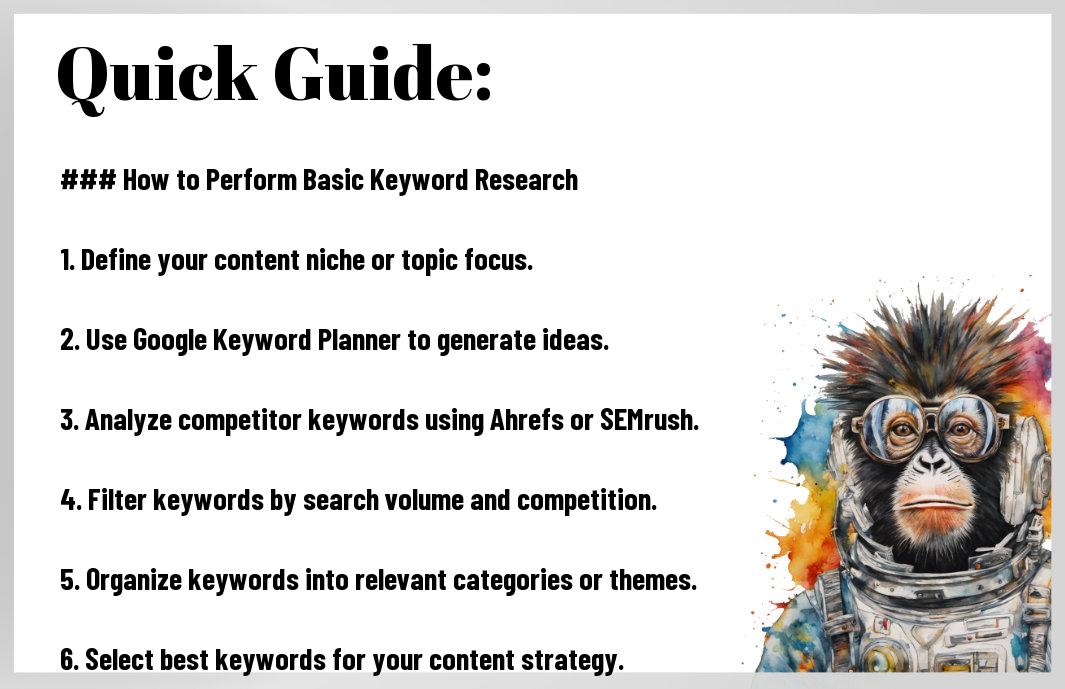
Step-by-Step Guide to Keyword Research
Unlike the common misconception that keyword research is a simple task, it requires a structured approach to uncover valuable insights. Follow this step-by-step guide to preemptively address your content needs and target your audience effectively.
| Step | Description |
|---|---|
| 1 | Brainstorm initial ideas based on your niche or area of interest. |
| 2 | Utilize keyword research tools to discover and analyze potential keywords. |
| 3 | Evaluate competition and search volume to select the most effective keywords. |
| 4 | Incorporate chosen keywords into your content strategy. |
Brainstorming Initial Ideas
Keyword brainstorming is a vital first step in your keyword research process. Start by writing down topics relevant to your business or niche. Think about the questions your audience may ask, industry trends, and any pain points you can address. This initial list sets the foundation for your more detailed research.
Using Keyword Research Tools
Keyword research tools can streamline your research process and enhance the quality of your findings. By utilizing tools like Google Keyword Planner, Ahrefs, or SEMrush, you’ll gain insights into search volume, competition, and variations of your initial ideas. These platforms allow you to track how keywords perform over time and identify trends.
StepbyStep, using keyword research tools effectively involves inputting your initial ideas and analyzing the results comprehensively. Look for high search volume keywords with low competition—ideal for driving traffic to your site. Pay attention to long-tail keywords, which can attract more targeted traffic while having less competition. Regularly re-evaluate your chosen keywords as search trends can shift, impacting your content’s visibility.
Tips for Effective Keyword Selection
Your success in keyword research hinges on selecting the right terms that resonate with your audience. To enhance your strategy, consider the following tips:
- Prioritize search volume to identify popular topics.
- Assess keyword difficulty to gauge competition.
- Incorporate long-tail keywords for targeted traffic.
- Use local keywords if applicable to your business.
Any effective research can lead you to more users; check out How To Do Keyword Research for Beginners for detailed insights.
Focus on Relevance
Relevance is crucial in keyword selection, as it ensures that the terms you choose directly align with your content and audience needs. By focusing on search intent, you can attract visitors genuinely interested in your offerings, boosting engagement and conversions.
Analyze Trends
An effective keyword strategy involves analyzing trends over time, which helps you spot shifts in user behavior and preferences. Utilizing tools like Google Trends can inform you about emerging topics and seasonal fluctuations in search interest.
A comprehensive analysis of trends allows you to identify patterns that could influence your content strategy. Leverage tools such as Google Trends and Ahrefs to uncover high-demand keywords while being cautious of short-lived trends that may skew your prioritization. It’s crucial to balance between evergreen topics and trending buzz to maintain consistent traffic and relevancy in your niche.

Pros and Cons of Different Keyword Strategies
Not every keyword strategy will work for you. Each approach comes with its benefits and drawbacks. To help you choose wisely, here’s a breakdown:
| Strategy | Pros and Cons |
|---|---|
| Long-Tail Keywords | Less competition, higher conversion rates. |
| Short-Tail Keywords | Higher search volume, quick visibility. |
| Local Keywords | Targeted traffic, community engagement. |
| LSI Keywords | Improved content relevance, semantic understanding. |
| Seasonal Keywords | Capitalizes on trends, timely traffic boosts. |
| Branded Keywords | Built-in trust, brand recognition. |
| Negative Keywords | Cost-efficient, eliminates irrelevant clicks. |
| Informational Keywords | Establishes authority, attracts traffic. |
| Question-Based Keywords | Directly answers user intent, enhances engagement. |
| Competitive Keywords | Potential high rewards, but tough competition. |
Benefits of Long-Tail Keywords
If you focus on long-tail keywords, you can achieve better targeting for your audience. With less competition, these keywords often lead to higher conversion rates because they align closely with specific user intent. Your content can become more relevant, and you can attract serious buyers looking for exactly what you offer.
Challenges with Short-Tail Keywords
Keyword competition can be a significant hurdle when using short-tail keywords.
Benefits come with challenges when opting for short-tail keywords. While you might enjoy a wider reach and a boost in traffic, these keywords attract intense competition from established brands, making it difficult for you to rank. Furthermore, short-tail keywords typically yield lower conversion rates as they don’t capture specific user intent, potentially resulting in less qualified traffic. Balancing your strategy can mitigate these risks and enhance your overall SEO success.
Common Mistakes to Avoid
Despite the wealth of resources available, many beginners fall into common traps when conducting keyword research. One significant error is failing to utilize effective tools like Google Keyword Planner, Ahrefs, or SEMrush that can help you identify valuable keywords. For more insights on avoiding pitfalls, check out The Basics of Keyword Research | CALS/LAS Web Team.
Ignoring Search Intent
Mistakes in keyword research often stem from neglecting to consider the search intent behind a query. Focusing solely on keywords without understanding what users actually want leads to targeting the wrong audience and ultimately poor performance.
Overlooking Updates in SEO
Clearly, staying informed about changes in SEO practices is vital for effective keyword research. Ignoring updates can result in outdated strategies that fail to align with current search algorithms, which could severely impact your site’s visibility.
Another area of concern is the constant evolution of search algorithms, which can affect your keyword strategy multifold. Regularly updating your knowledge on best practices and adapting your approach allows you to leverage new opportunities effectively. Failing to do so can lead to your content becoming obsolete or not reaching your target audience effectively, thereby diminishing your traffic and engagement over time. Keeping up with SEO trends ensures that you maximize your efforts and remain competitive.
To wrap up
Drawing together the fundamentals of keyword research, you can significantly enhance your content strategy by leveraging tools like Google Keyword Planner, Ahrefs, or SEMrush. These platforms allow you to discover high-value keywords related to your niche, analyze search volume and competition, and uncover opportunities for optimization. By incorporating relevant keywords into your content, you improve your chances of attracting targeted traffic, ultimately driving engagement and boosting your online presence.
FAQ
Q: What is keyword research and why is it important?
A: Keyword research is the process of identifying and analyzing the terms and phrases that users enter into search engines when looking for information related to a specific subject. This process is crucial because it helps you understand what your target audience is interested in and what language they use. By optimizing your content around these keywords, you can improve your visibility in search engine results, attract more visitors to your site, and ultimately drive conversions or sales.
Q: How can I start my keyword research using Google Keyword Planner?
A: To start keyword research with Google Keyword Planner, first, create a Google Ads account if you don’t already have one. Once logged in, navigate to the ‘Tools & Settings’ menu and select ‘Keyword Planner.’ You can choose either ‘Discover new keywords’ to find keyword ideas based on your products or services, or ‘Get search volume and forecasts’ to see how specific keywords perform. Enter your seed keywords, and Google will provide a list of related keywords along with metrics like search volume, competition, and suggested bids, which can help you prioritize which keywords to target.
Q: What are the benefits of using tools like Ahrefs or SEMrush for keyword research?
A: Tools like Ahrefs and SEMrush offer advanced features that go beyond basic keyword suggestions. They provide thorough insights into keyword difficulty, click-through rates, and related keywords. Additionally, these tools allow you to analyze competitor strategies by showing which keywords are driving traffic to their sites. This data can help you identify gaps in your own keyword strategy, uncover opportunities for content creation, and optimize existing content to improve search rankings. Both Ahrefs and SEMrush also offer features like rank tracking and site audits, enhancing your overall SEO strategy.